
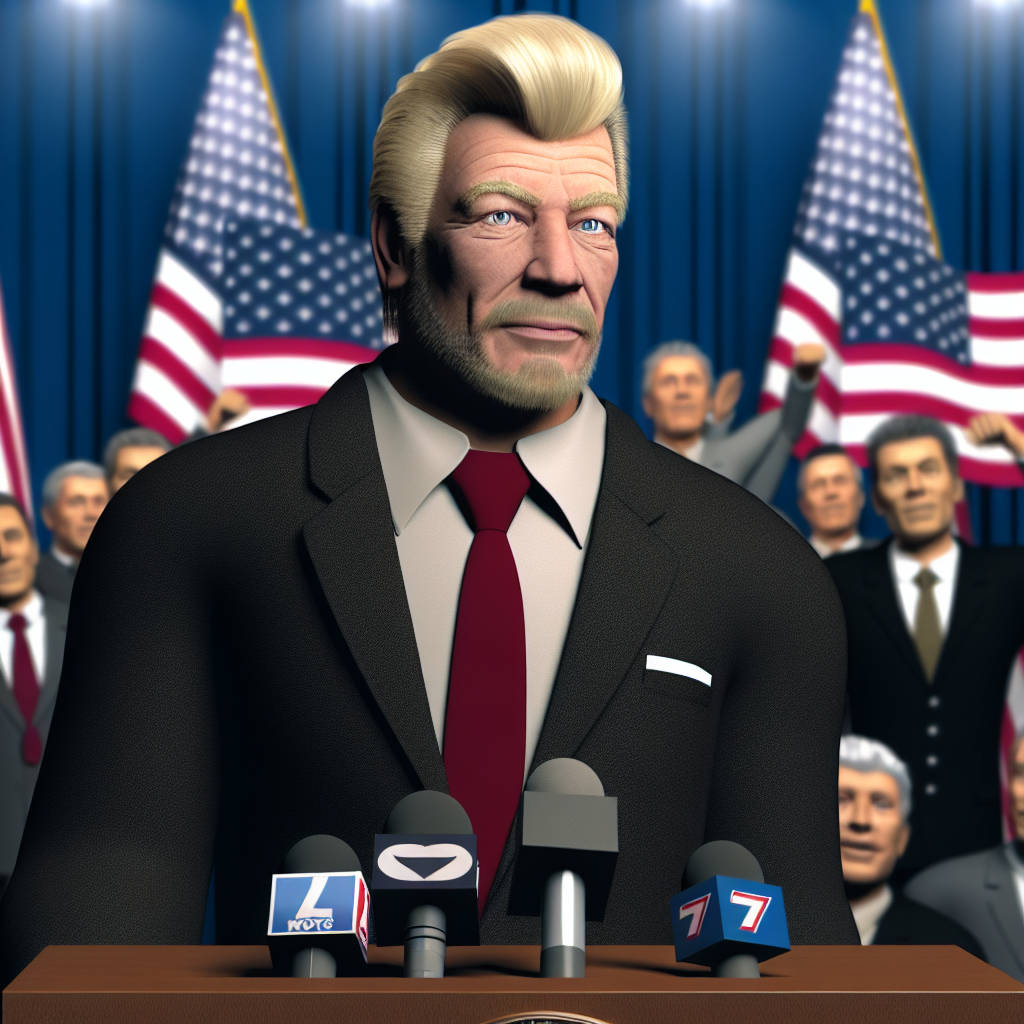
Donald J. Trump: The Master of Political Communication
From the moment he descended the golden escalator at Trump Tower in 2015 to announce his presidential bid, Donald J. Trump reshaped the American political landscape. But more than his outspokenness at rallies or controversial policy stances, it was his unfiltered, hands-on use of social media — especially Twitter — that marked the cornerstone of his political persona. With a few typed words, he could shake markets, redirect mainstream media headlines, or ignite fervent debates across dinner tables and news panels across the world.
His social media strategy, often cryptic, sharp-tongued, and always unapologetically bold, served as more than a channel of communication — it became the spearpoint of his political brand. One tweet could signal a major shift in foreign policy, a pivot in domestic priorities, or a cultural commentary that stirred both fans and critics into action. Whether you agree or disagree with Trump’s approach, one thing remains undeniably clear: he mastered the art of commanding attention in the digital age, and this dominance continues to shape political discourse.
Table of Contents
1. The Digital Trump Phenomenon: More Than Tweets
2. Politics of Provocation: Why Controversy Works
3. Cryptic Messages and Sudden Announcements: Strategy or Instinct?
4. Leadership Through Polarization: The Trump Doctrine
5. Social Media as Trump’s Political Theater
6. Public Opinion: Division, Devotion, and Beyond
7. The Global Ripple Effect of Trump’s Communication Style
8. From President to Media Titan: The Evolution Continues
9. Conclusions: The Legacy of Trump’s Digital Diplomacy
The Digital Trump Phenomenon: More Than Tweets
Donald J. Trump didn’t invent political communication, but he arguably reinvented it for the internet age. Unlike polished press releases or censored public addresses, Trump’s tweets — often unfiltered and impulsive — conveyed immediacy and a rawness unseen in past presidencies. His supporters saw authenticity, while critics saw recklessness. Either way, his words were never ignored.
Where past presidents relied on official spokespeople and advisors to disseminate information cautiously, Trump bypassed the press corps. On platforms like Twitter, he spoke directly to the American people, framing issues on his terms. In doing so, he turned traditional media into a reactionary observer, forced constantly to respond to his declarations.
This direct-to-voter strategy was not accidental. From coining phrases like “fake news” to naming opponents with nicknames designed to stick (“Sleepy Joe,” “Crooked Hillary”), he leveraged social media language for political effect. Each post served as a mini-campaign in itself — crafted to amplify division or unity, depending on the moment.
Politics of Provocation: Why Controversy Works
One of Trump’s most distinctive political tools is his embrace of controversy. To the outsider, his unpredictable posts may appear chaotic or counterproductive. But the chaos is often the point.
By wading into cultural conflicts or questioning institutional norms, Trump reframed complex issues into bite-sized conflicts that resonated emotionally. He tapped into frustration with the political establishment, offering himself not just as a candidate, but as a vessel for grievance.
Whether addressing immigration, gun rights, election interference, or global diplomacy, Trump’s strategy has been to push the line further than expected. This provocation isn’t just for shock value. It keeps his political base energized and loyal, while simultaneously baiting opponents into responses that reinforce his outsider identity.
Cryptic Messages and Sudden Announcements: Strategy or Instinct?
One doesn’t have to scroll far into Trump’s timeline before finding posts that spark curiosity or speculation. From cryptic one-liners like “covfefe” to suggestive phrases lacking context, Trump’s tweets often require interpretation. Fans read between the lines for clues; critics dissect them for missteps.
While many question whether such postings are strategic or instinctual, it’s possible that they function as both.
There’s a deliberate vagueness in some statements, designed to provoke public and media response without committing to a firm policy stance. For example, signaling sweeping investigations or promising dramatic future revelations mobilizes anticipation without delivering confirmation.
This builds suspense, mirrors techniques used in marketing and entertainment, and keeps Trump’s name entrenched in daily discussion. Every ambiguous message becomes a national guessing game, a tactic that keeps him — and his causes — in perpetual spotlight.
Leadership Through Polarization: The Trump Doctrine
Trump’s leadership model doesn’t aim to bridge divides; it exploits them. He didn’t aspire to be a unifier or bipartisan peacemaker. Instead, he carved a distinct political identity in opposition to conventional norms, creating a dichotomy: you’re either for him, or against him.
This polarization served as the engine of his political ascendancy. It enabled Trump to maintain unwavering support from a significant portion of the electorate, even amid scandals that would devastate other political careers.
By positioning himself as the target of a political witch hunt or media bias, Trump harnessed victimhood narratives into power. For his base, his adversaries’ criticisms validated their loyalty — proof he was willing to confront the system on their behalf.
This model of us-versus-them leadership, while highly divisive, proved remarkably resilient. It redefined success in political leadership as not compromise, but constant confrontation.
Social Media as Trump’s Political Theater
To understand Trump’s political communication, one must appreciate his roots in storytelling and entertainment. Well before his political career, Trump thrived in narrative control — from television appearances to tabloid features to his role on “The Apprentice.”
On social media, he fused politics with spectacle. Every post became an act in an ongoing drama, filled with heroes (his supporters), villains (his detractors), and cliffhangers (promised revelations).
Hashtags, nicknames, slogans, and all-caps pronouncements formed a language unique to his brand. The performances didn’t occur on a debate stage or a Senate floor — they happened in real time, from screen to subconscious.
This blend of drama and dialogue blurred the line between governance and entertainment. In many ways, Trump turned the national political conversation into a reality show watched worldwide.
Public Opinion: Division, Devotion, and Beyond
Trump’s online persona forced Americans to reevaluate what political leadership should sound and feel like. His bombastic style thrilled millions and horrified just as many, but no one could look away.
He commanded immense loyalty from factions who felt abandoned by the political elite. For many within industrial towns, agricultural communities, and veterans’ circles, Trump’s rhetoric reflected a raw honesty and authenticity that had been absent from polished political leaders.
Yet, the same factors that earned him adulation sparked intense opposition. Critics viewed his language as incendiary, divisive, and often lacking empathy. Media outlets scrutinized his factual accuracy, diplomatic tone, and policy consistency.
Still, the power of his words was undeniable. Whether lambasting global institutions or praising his own administration, Trump’s communication style invited participation — and polarization.
The Global Ripple Effect of Trump’s Communication Style
Trump didn’t just influence American political conversation; he inspired a global shift in how politicians communicate.
Leaders from Brazil to the Philippines began embracing similar direct-to-public strategies. Taking cues from Trump’s online theatrics, international figures realized the benefits of circumventing traditional media and speaking in emotionally charged, sometimes controversial, statements.
Even in European democracies, election campaigns began incorporating more bold, provocative language — appealing directly to base instincts rather than policy nuance. This wasn’t mere imitation; it represented a recognition that the rules of political engagement had changed.
Trump’s critics worried this trend normalized misinformation and spectacle in serious global discourse. Supporters, however, viewed it as a democratization of communication — taking power from elites and returning it to the people.
Regardless of interpretation, Trump’s social media presence reshaped what global political theater looks like.
From President to Media Titan: The Evolution Continues
After his presidency, Trump didn’t fade into silence. With bans from mainstream platforms like Twitter and Facebook, many predicted his digital influence would wane. But he quickly rebounded by launching his own platform, ensuring his voice remained central in conservative circles.
No longer bound by the responsibilities of presidency, Trump’s online communications grew even more assertive, focusing on current administration critiques, upcoming election strategies, legal proceedings, and cultural flashpoints.
He became both kingmaker and combatant — endorsing candidates, rallying support, and continuing to dominate news cycles. Analysts suggest that his digital reach, even in a formal political hiatus, rivals sitting politicians in many countries.
With the 2024 election looming, Trump’s media strategy shows no signs of decline. If anything, it’s poised for resurgence. His unique blend of digital savvy, media instinct, and political performance continues to electrify his base and unsettle rivals.
Conclusions: The Legacy of Trump’s Digital Diplomacy
Donald J. Trump’s legacy will be debated for generations — not just in terms of legislative outcomes or Supreme Court appointments, but in how he transformed the role of communication in leadership.
His use of social media shattered long-standing codes of political decorum, ushering in a new era where leaders could bypass filters and shape narratives directly. With every spontaneous tweet or fired-up post, Trump demonstrated the power of commanding attention — and the risks and rewards that come with it.
In an age of oversaturated information and fleeting attention spans, Trump proved that clarity, confidence, and controversy — when wielded deliberately — can dominate the landscape. His leadership style forces us to ask: Is the future of politics in policy or performance?