In an increasingly crowded tech landscape, building a strong, differentiated IT brand
is more essential than ever. Whether you’re a Managed Service Provider (MSP), a Software-as-a-Service (SaaS) vendor, or a cybersecurity startup, your brand is more than just a logo—it encapsulates how your target audience perceives your value, credibility, and relevance.
In this post, we’ll dive deep into essential components of an IT branding strategy:
Table of Contents
- 1. Positioning and Naming IT Products and Services
- 2. Visual Identity for Tech Companies
- 3. Building Brand Trust in IT: Certifications, Compliance, and Customer Support
- 4. Emerging Trends Shaping IT Branding
- 5. IT Branding Audit Checklist for Founders
1. Positioning and Naming IT Products and Services
Creating a brand starts with strategic positioning. In the crowded IT field, product names and service labels should communicate what you do, why it matters, and how you’re different—without overwhelming or confusing your audience.
Why Positioning Matters in IT
Positioning is the process of defining how your brand and offerings fit in the market—who they’re for, what problem they solve, and why they’re superior to alternatives. This is especially important in the IT space where competitors often sell similar solutions with different language.
Key Elements of Effective Positioning:
- Audience clarity: Know your ideal buyer—CIOs, founders, IT departments, SMEs? Tailor your messaging accordingly.
- Problem focus: Don’t lead with tech specs. Lead with business outcomes like uptime, security, cost-savings, or automation.
- Value differentiation: Communicate what you do better than competitors—whether it’s better support, more automation, or scalability.
Naming as a Differentiator
Names need to be clear, memorable, and aligned with your brand positioning. Good IT naming strikes a balance between simplicity and specificity.
Tips for Naming IT Services or Products:
- Avoid jargon: Acronyms or overly technical terms can alienate non-technical buyers.
- Go benefit-first: Consider names that hint at outcomes: e.g., “BackupPlus” vs. “BRX-500.”
- Check domain availability: Tech buyers will search for your product or service; a clean .com (or .ai/.io) helps build legitimacy.
- Series naming for platforms: Use naming conventions that clearly show hierarchy or category (e.g., Microsoft has Azure, Azure DevOps, Azure AD).
Real-World Example: Datto
Datto is a great case study among MSP technology providers. They offer clear naming: “Datto SIRIS” (for business continuity and disaster recovery), “Datto RMM” (remote monitoring management), and “Datto Networking.” Each name is concise, memorable, and suggests the product category while reinforcing the Datto master brand.
2. Visual Identity for Tech Companies
Once positioning is clear, your visual identity must help communicate professionalism, reliability, and innovation. For many IT firms, first impressions happen through a website or digital presentation—so every design element must be intentional.
Essential Brand Design Elements:
- Logo: Should be simple, scalable, and adaptable for use on dark/light backgrounds.
- Color palette: Tech firms often gravitate to blue (trust), green (growth), and black (sophistication), but unique palettes help stand out.
- Typography: Choose fonts that are modern but readable. Avoid overly stylized typefaces common in legacy tech.
- Iconography: Use clean, flat design icons to illustrate services and features.
UX and Web Design Best Practices
Your company’s website must clearly articulate your offerings and provide an easy path to demo, purchase, or contact.
Key IT-Focused UX Priorities:
- Page speed: Performance is a hidden brand signal; delays suggest inefficiency.
- Hero Messaging: In under 5 seconds, the homepage should explain what the vendor offers and who it helps.
- Service navigation: Organized product/service pages reduce bounce rate by helping visitors easily find solutions.
- Responsive and accessible: With CIOs and IT buyers increasingly using mobile devices, responsiveness is crucial.
Real World Example: Okta
The identity management platform Okta does a stellar job of aligning its sleek logo and SaaS dashboard design with its positioning as a secure, enterprise-grade solution. Their website balances trust-building with clean visuals and protective whitespace.
Another case in point: Cybersecurity provider CrowdStrike. Their aggressive red-and-black branding supports their narrative of rapid threat detection, and their Falcon logo builds mnemonic recall in a crowded space.
3. Building Brand Trust in IT: Certifications, Compliance, and Customer Support
IT buyers are naturally skeptical—they’re dealing with business continuity, security, and mission-critical infrastructure. That means trust isn’t just a buzzword in tech branding. It’s foundational.
Ways IT Brands Can Build Immediate Trust:
A. Certifications & Standards
- ISO 27001, SOC 2, and HIPAA Compliance badges on your website show a commitment to security and best practices.
- Displaying Microsoft Partner, AWS Partner, or NIST compliance also reinforces vendor credibility.
B. Industry Authority
- Case studies, white papers, and published cybersecurity threat reports establish your firm as a leader.
- Regular blog updates signal an active and informed team.
C. Transparent Customer Support
- Real-time chat options, ticketing systems, or even publishing your average support response times boosts buyer confidence.
- MSPs who showcase SLAs (Service Level Agreements) with uptime guarantees often win deals over tech firms that hide behind ambiguity.
D. Testimonials and Social Proof
- Video testimonials from recognizable brands can outweigh a thousand words of ad copy.
- Displaying customer logos, G2/Trustpilot ratings, or Gartner mentions helps buyers feel confident in their choice.
Case Study: ConnectWise
This popular toolset for MSPs brings in multiple trust signals: SOC 2 Compliance, an extensive partner network, a cybersecurity training offering, and a consulting division—positioning them not just as a vendor, but a long-term partner.
Meanwhile, cybersecurity brand SentinelOne earned trust by putting their MITRE ATT&CK Evaluation results front and center—demonstrating product efficacy through independent cybersecurity benchmarks.
4. Emerging Trends Shaping IT Branding
The IT services landscape is changing rapidly—and with it, the best practices for branding are evolving too.
1. AI-Driven Value Messaging
As AI becomes part of nearly every tech product, brands are shifting language to showcase automation, smart analysis, and productivity enhancement. But be wary of overpromising.
Tip: If your product includes AI, use specific claims—like, “60% faster resolution using predictive diagnostics”—rather than vague slogans like “AI-powered efficiency.”
2. White-Label Branding
IT service providers often resell SaaS platforms or bundles of cloud services. White-labeling allows MSPs or resellers to brand technology as their own.
Implication: If you’re a SaaS platform targeting resellers, your brand should be “invisible” by design yet reinforce your commitment to back-end support and uptime. Think “powered by”—but with minimalist branding.
3. Low-Code/No-Code Simplification
As complexity decreases for users, so must branding. The rise of low-code or citizen developer tools has forced vendors to rethink overcomplicated UX/UI elements and naming conventions.
Example: Platforms like Zapier and Airtable have mastered approachable branding. Even their documentation feels more like onboarding than dev docs. If you’re marketing IT services to non-dev teams, take design lessons from no-code leaders.
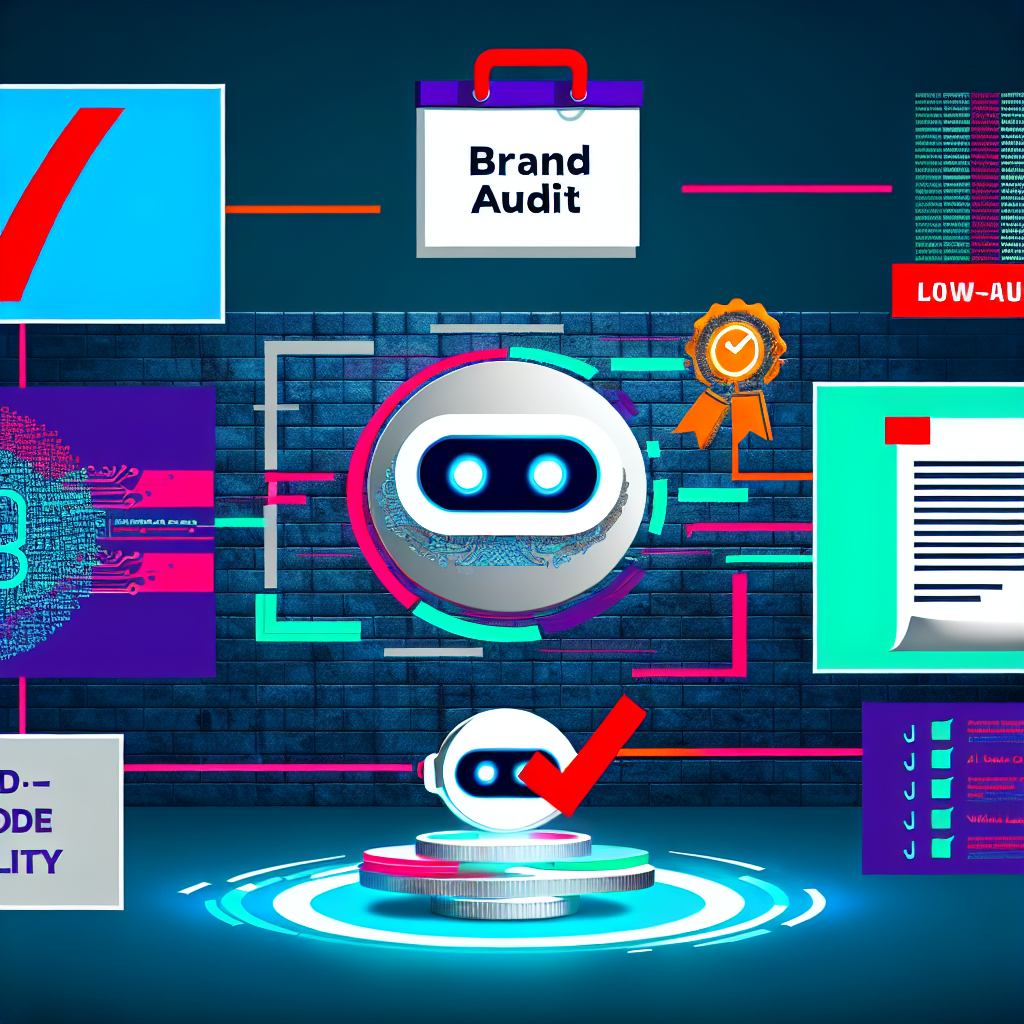
5. IT Branding Audit Checklist for Founders
For tech founders and emerging IT startups, it’s easy to let branding fall by the wayside while building features, raising capital, or acquiring users. But the right brand strategy compounds over time—accelerating sales, retention, and word-of-mouth.
Use this practical checklist to internally audit your brand:
✅ Positioning & Name Clarity
- [ ] Can I articulate what my company does in one line without jargon?
- [ ] Are my service/product names outcome-focused and easy to remember?
- [ ] Is there a clear value delta between me and competitors?
✅ Visual Identity
- [ ] Is my logo clean, legible, and adaptable for mobile, docs, and decks?
- [ ] Do my site and digital properties have a consistent color scheme and font usage?
- [ ] Is the website responsive, fast, and accessible?
✅ Trust Signals
- [ ] Are my security/compliance certifications visible on my site?
- [ ] Do I have updated case studies or client testimonials?
- [ ] Is there a visible support/help option with trackable metrics?
✅ Trend Alignment
- [ ] Am I being specific with AI claims, if applicable?
- [ ] Have I considered low-code audiences if targeting non-technical users?
- [ ] Is there an opportunity for white-label expansion?
Final Thoughts
Your IT brand is more than IaaS, SaaS, or cybersecurity—it’s a promise of reliability, security, and innovation. A well-crafted brand doesn’t just get attention—it earns trust, drives conversions, and positions you for long-term scaling.
Don’t think of branding as fluff. In the IT world, it’s one of the most underestimated growth levers.
Next in the series: In our next post, we’ll dive into creating compelling messaging frameworks for MSPs, including how to segment messaging across target personas—from end-users to CTOs.
Interested in auditing your IT brand with a consultant? Or have a favorite example of tech branding done right? Share in the comments!