
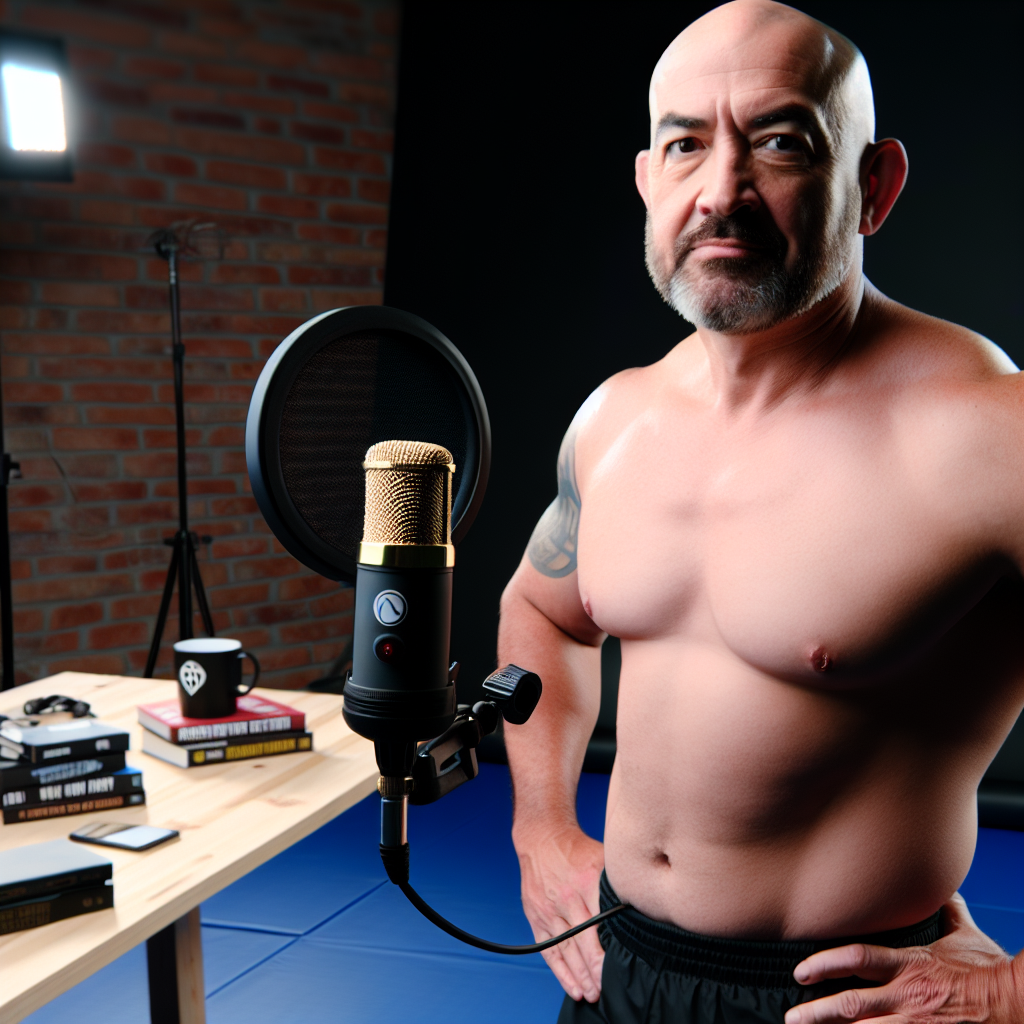
In a world where truth can be elusive and narratives often shape our perception of reality, cultural commentator and podcast icon Joe Rogan continues to provoke thoughtful discussion with his bold takes.
One of Rogan’s recent social media shoutouts gave a nod to those who stand firm in their convictions in the face of widespread misinformation—or official narratives that some challenge. But this post wasn’t just about touting conspiracies; instead, it touched on something deeper: the resilience required to maintain skepticism without slipping into cynicism. Through his signature blend of curiosity and critique, Rogan reminds us of the importance of questioning everything—but also of thinking for ourselves.
This rallying cry for intellectual independence taps into a broader cultural moment—one in which conspiracy theories are no longer just fringe ideas but part of mainstream conversations. Rogan’s platform, renowned for its long-form explorations of politics, philosophy, science, and culture, acts as a mirror reflecting the complexities of belief in a post-truth era. Whether you’re a skeptic, a seeker, or simply someone navigating the digital age’s labyrinth of “truths,” Rogan’s stance invites an essential question: What does it mean to believe?
Let’s take a deep dive into Rogan’s perspective on conspiracy theories, belief systems, and the balance between open-mindedness and critical thinking.
Table of Contents
- 1. The Cultural Rise of Conspiracy Theories
- 2. Joe Rogan’s Unique Position in the Skepticism Spectrum
- 3. Psychological Roots of Belief and Doubt
- 4. The Power of Conviction in a Post-Truth Era
- 5. Navigating the Fine Line: Healthy Skepticism vs. Radical Distrust
- 6. Rogan’s Call to Intellectual Independence
- 7. The Role of Podcasts in Shaping Modern Discourse
- 8. A Look at Notable Conversations on Conspiracies from Rogan’s Show
- 9. The Digital Dilemma: Misinformation, Algorithms, and Echo Chambers
- 10. Conclusion: Standing Firm, Thinking Free
1. The Cultural Rise of Conspiracy Theories
Conspiracies have long fascinated humanity. From secret societies purportedly pulling global strings to cover-ups surrounding major world events, the idea that there might be “more than meets the eye” has endured through the ages.
But in the 21st century, with the rise of the internet and social media, conspiracy theories have transcended obscure forums and entered common cultural discourse. Today, they’re just as likely to be discussed at dinner tables as they are among fringe groups.
From questions about moon landings and 9/11 to theories about Big Pharma, technology moguls, or secret government operations, these modern myths have captivated public imagination. Yet, their prevalence has prompted necessary questions about the line between healthy skepticism and harmful mistrust.
This is the context in which Joe Rogan’s voice becomes particularly relevant—not as a promoter of conspiracies, but as someone keen to explore them with open curiosity and challenge both the mainstream and fringe narratives.
2. Joe Rogan’s Unique Position in the Skepticism Spectrum
Joe Rogan isn’t a conspiracy theorist in the traditional sense. His podcast, The Joe Rogan Experience, often serves as a neutral ground where ideas, no matter how controversial, can be dissected and debated.
Rogan’s willingness to entertain unconventional views doesn’t stem from blind acceptance but from a deep-seated interest in understanding different perspectives. This distinguishes him from both mainstream commentators and dedicated conspiracy theorists.
When Rogan shared a recent shoutout to those who “stand firm in their beliefs,” many interpreted it as praise for those who hold their ground in the face of what can often be overwhelming social pressure. Yet, this commentary carried a more nuanced message—not every believer in a conspiracy is lost in delusion; many are simply seeking answers in a chaotic world.
That desire to genuinely understand, combined with his commitment to critical thinking, makes Rogan a compelling voice in the ever-complex conversation on belief and skepticism.
3. Psychological Roots of Belief and Doubt
To understand the allure of conspiracy theories—and why certain people stand by them—we must explore the psychology behind belief systems.
Human brains are wired to find patterns, especially in chaos. This pattern recognition, while often advantageous, can sometimes lead us down rabbit holes of unfounded connections. Events that don’t fit our existing narratives can cause cognitive dissonance, a discomfort that we naturally seek to resolve. Conspiracy theories often offer neatly packaged explanations for otherwise inexplicable occurrences.
Moreover, belief is deeply social. When groups form around shared narratives—even those that challenge or contradict official accounts—there’s a sense of belonging. These communities can enforce validation and reinforce ideologies, for better or worse.
Rogan has often discussed the importance of questioning one’s emotional response to information. He encourages introspection: Why do we believe what we believe? Is it fact-based, or simply aligned with our preferred worldview?
4. The Power of Conviction in a Post-Truth Era
We live in what many call a “post-truth” society—where appeals to emotion or personal belief often shape public opinion more than objective facts.
In such a climate, standing firm in one’s convictions can either be seen as admirable resilience or dangerous obstinacy. The difference often lies in the process by which those convictions were formed.
In his social media reflection, Rogan lauded those who aren’t swayed by popular opinion alone. Trusting one’s discernment over dictated truths can indeed be empowering. However, it also demands a responsibility to question not only official narratives but also the sources and motives behind alternative viewpoints.
Conviction, when coupled with curiosity and self-awareness, becomes a tool for genuine understanding. When it morphs into ideological rigidity, it risks closing off dialogue. Rogan’s frequent emphasis on remaining intellectually flexible yet principled—whatever the topic—highlights a model for balancing strength with skepticism.
5. Navigating the Fine Line: Healthy Skepticism vs. Radical Distrust
One of the ongoing themes in Rogan’s discussions on conspiracies is the importance of maintaining healthy skepticism—a critical lens without giving way to paranoid nihilism.
Healthy skepticism encourages inquiry, verification, and dialogue. Radical distrust dismisses all institutions, experts, and consensus outright, often replacing them with unverifiable or sensational claims.
It’s a tricky terrain. Once someone is primed to distrust the media, government, or science, new contradictory evidence may simply “prove” a bigger cover-up. This phenomenon, sometimes called the “backfire effect,” can make combating misinformation even harder.
Rogan often tries to walk this tightrope: giving space for alternative views while questioning them rigorously. His approach emphasizes that skepticism should lead to better questions—not quick answers.
6. Rogan’s Call to Intellectual Independence
Through his frequent discussions and public commentary, Joe Rogan promotes a form of intellectual independence—the notion that each individual has the capacity (and responsibility) to think critically, examine evidence, and question dominant paradigms.
Rogan’s admiration for those who “stand firm” resonates most when it aligns with seeking truth over defending ego. In an era where consensus can be coerced, daring to disagree—especially when motivated by curiosity rather than contrarianism—can be revolutionary.
True independence is about embracing complexity. It involves acknowledging that we don’t have all the answers, but we can keep asking better questions. Not every conspiracy is a lie, and not every official story is truth. Rogan’s underlying message? Keep your mind open, but not so open that critical thinking falls out.
7. The Role of Podcasts in Shaping Modern Discourse
The podcasting realm has become a powerful tool for democratizing discourse. Long-form content allows for nuance, depth, and dialogue that traditional soundbites often fail to offer.
Joe Rogan’s rise as a media powerhouse is linked to his ability to create space for debate without censorship—allowing controversial ideas to be aired, questioned, and dissected in real time.
This format empowers listeners to make up their own minds. Exposure to different viewpoints, even polarizing ones, stimulates cognitive engagement. Listeners can analyze arguments, spot logical fallacies, and decide for themselves what resonates.
This has made Rogan’s platform a crucible for important conversations around freedom of speech, media bias, and the role of narrative in shaping reality—especially in discussions involving conspiracies and fringe beliefs.
8. A Look at Notable Conversations on Conspiracies from Rogan’s Show
Throughout his podcasting career, Rogan has hosted a diverse array of guests discussing contentious topics—from whistleblowers and journalists to scientists and skeptics.
Some notable guests include:
- Dr. Robert Malone – a controversial figure in the COVID-19 discourse.
- Edward Snowden – offering insights into surveillance, privacy, and government secrecy.
- Graham Hancock – proposing alternative histories of human civilization.
Each conversation is a case study in applied skepticism. Rogan rarely lets claims go unchallenged, but he also rarely bans uncomfortable ideas. This balance allows for fuller perspectives instead of reductive narratives.
These conversations, regardless of belief alignment, showcase the value of open debate in exploring (and sometimes debunking) conspiratorial thinking.
9. The Digital Dilemma: Misinformation, Algorithms, and Echo Chambers
One of the biggest challenges in modern discourse lies in navigating the digital information ecosystem.
Algorithms on platforms like YouTube, Facebook, and Twitter are designed to show us more of what we already like. This creates echo chambers—bubbles where dissenting views are rare and confirmation bias thrives.
Joe Rogan, being aware of this, often critiques these platforms for stifling dissent while inadvertently promoting extremism. Censorship, he argues, can sometimes backfire by driving people further toward alternative or underground sources.
His message aligns with the idea that sunlight is the best disinfectant: expose bad ideas to public scrutiny rather than suppressing them and risking martyrdom or confusion.
10. Conclusion: Standing Firm, Thinking Free
Joe Rogan’s social media homage to those who hold firm in their beliefs is more than just a salute—it’s a discussion starter.
In a world flooded with content, commentary, and conflicting narratives, the ability to think independently—while remaining humble in the face of complexity—is more important than ever. Rogan’s voice doesn’t ask us to believe everything or dismiss everything. It asks us to stay curious, question deeply, and recognize that truth often lies not at the extremes, but in rigorous exploration.
As we navigate the tangled threads of media, myth, and meaning, perhaps the most radical act we can take is this: to listen, to question, and to believe in our own ability to seek truth.
Because in the end, it’s not just about what we believe—it’s about why. And that, more than any theory, may be the key to understanding the world.